
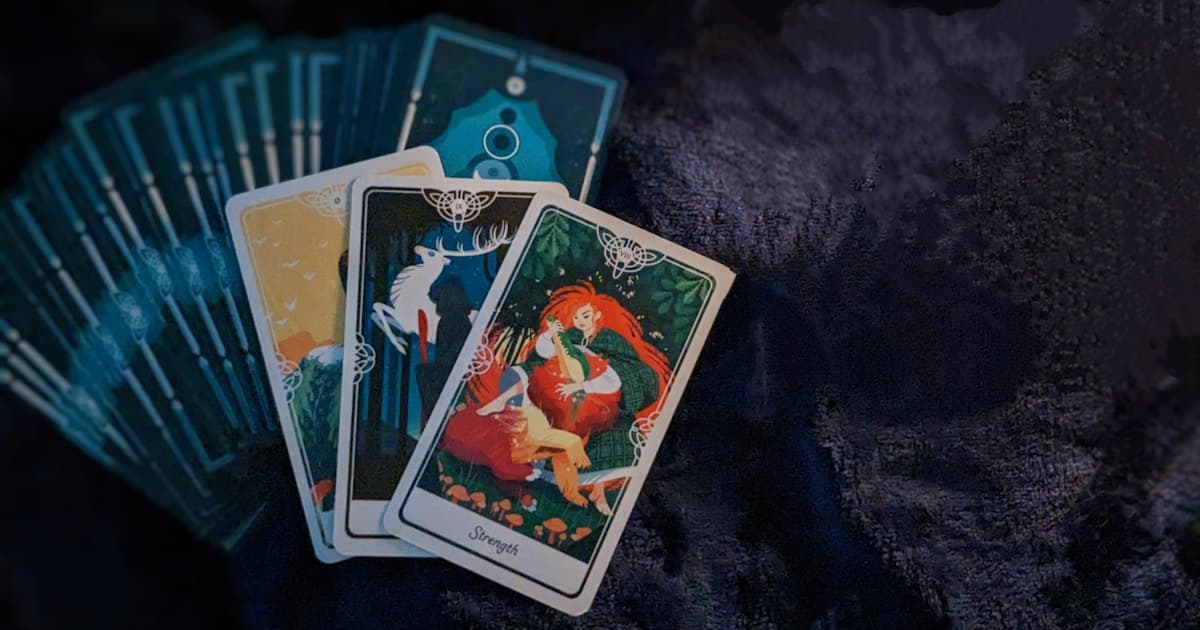
When a tarot card appears upside down in a spread, it is called a reversal. Reversed cards are one of the most debated topics in tarot — some readers use them as a standard part of their practice, while others never read reversals at all. Both approaches are valid. Understanding how reversals work gives you an additional layer of interpretive depth, whether or not you choose to incorporate them.
What Reversals Indicate
A reversed card does not simply mean the opposite of the upright meaning. Reversals are more nuanced than that. A reversed card typically indicates one of several modifications to the card's energy:
Blocked or delayed energy. The card's theme is present but struggling to express itself. The energy is there, but something is preventing it from flowing freely. For example, The Empress reversed might indicate blocked creativity or difficulty nurturing yourself.
Internal rather than external expression. The card's energy is operating internally rather than manifesting in the outer world. The High Priestess reversed might indicate that your intuition is active but you are not trusting it or acting on it.
Excess or deficiency of the card's energy. Reversals can indicate either too much or too little of a quality. Strength reversed might mean either that you are being too forceful or that you are not asserting yourself enough.
Shadow expression. The reversed card shows the shadow side of its meaning — the less evolved or less conscious expression. The Emperor reversed might indicate authoritarian behavior or a dysfunctional relationship with power.
Returning or resolving energy. Sometimes a reversal indicates that a challenging theme is on its way out. The Ten of Swords reversed — traditionally the card of rock bottom — often indicates that the worst is over and recovery is beginning.
How to Read Reversals
Context determines which reversal meaning applies. Consider the surrounding cards, the position in the spread, the question asked, and your intuitive response. A reversed card sandwiched between positive cards may simply indicate a minor delay. The same reversed card surrounded by challenging cards may indicate a more significant blockage.
Some readers use the position of the card within the spread to determine the reversal meaning. A reversed card in a past position might indicate a pattern you are moving beyond. In a present position, it might indicate active blockage. In a future position, it might indicate a theme that is resolving.
Major Arcana Reversals
Reversed Major Arcana cards carry significant weight. The Fool reversed may indicate recklessness or fear of taking the leap. The Tower reversed suggests internal upheaval rather than external crisis. Death reversed indicates resistance to necessary transformation. The World reversed suggests incompletion or a delay in reaching a natural conclusion.
Major Arcana reversals often point to the lesson of the card being particularly relevant but not yet integrated. The energy is knocking at the door, but you have not opened it yet.
Minor Arcana Reversals
Minor Arcana reversals tend to be more practical and situational. The Three of Cups reversed might indicate a social event that does not go as planned. The Eight of Pentacles reversed might indicate that you are going through the motions at work without genuine engagement. The Two of Swords reversed might indicate that a decision you have been avoiding is forcing itself to the surface.
Whether to Use Reversals
If you are a beginner, it is perfectly acceptable to read all cards upright until you are comfortable with the basic meanings. Adding reversals effectively doubles the number of interpretive possibilities and can be overwhelming when you are still learning.
If you choose to use reversals, be consistent. Either use them in every reading or not at all. Picking and choosing when to use reversals undermines the integrity of the reading.
Ultimately, reversals are a tool for adding depth and nuance. They are not required for accurate, insightful readings, but they can enrich your practice significantly once you are comfortable with the basics.