
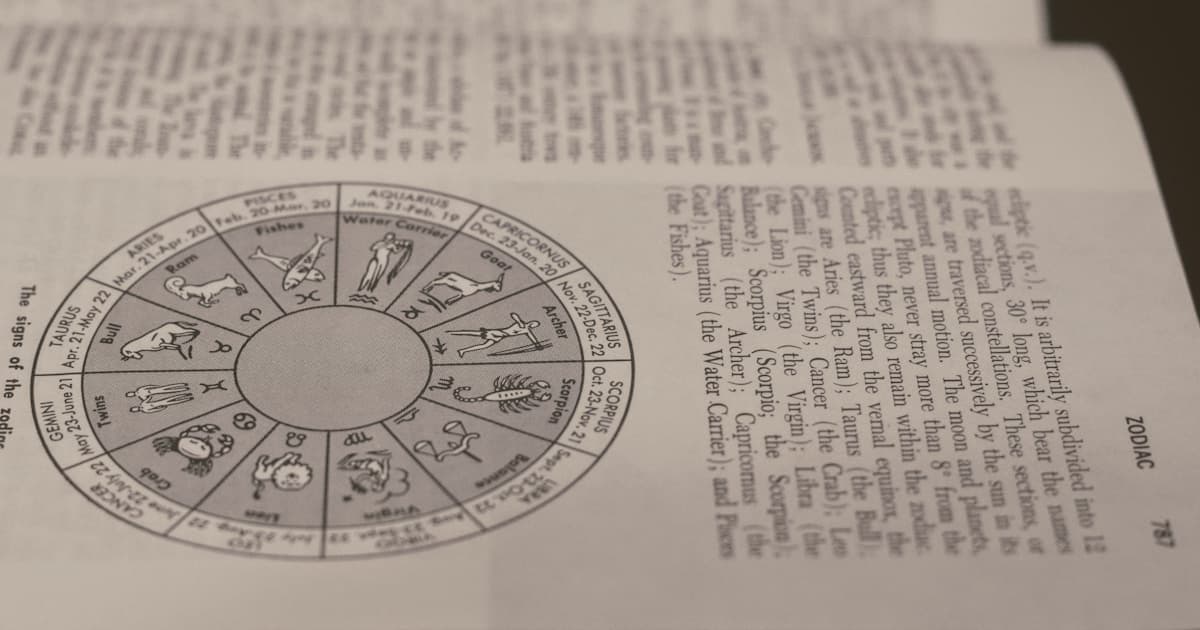
The twelve houses are the framework that makes your birth chart personal. While the planets show what energies are at work and the zodiac signs show how those energies express, the houses show where in your life those energies play out. Without the house system, a chart would describe general tendencies but could not pinpoint which areas of your life are most affected.
How Houses Are Calculated
Houses are determined by your exact birth time and location. As the Earth rotates, different degrees of the zodiac rise over the eastern horizon. The sign and degree rising at your birth becomes the cusp of your First House — your Ascendant — and the remaining eleven houses follow in order.
Because the house system depends on the precise angle of the horizon at your birthplace, two people born at the same moment but in different cities will have different house cusps. Similarly, two people born in the same hospital but hours apart will have their planets distributed across completely different houses. This is why the birth time is so crucial and why astrologers insist on accuracy.
Several house systems exist — Placidus, Whole Sign, Equal House, Koch — and they can produce slightly different results. Placidus is the most widely used in Western astrology. Whole Sign houses, which place the entire sign on one house, are gaining popularity for their simplicity and historical roots in Hellenistic astrology.
The Houses in Detail
The First House — Identity and Self The First House begins at your Ascendant and represents you — your body, your appearance, your temperament, and the way you instinctively approach life. Planets here have an outsized influence on your personality because they are the first thing others encounter. People with a packed First House often have strong, distinctive personalities that are impossible to ignore.
The Second House — Money and Values The Second House governs your material resources, personal finances, self-worth, and the things you value most. Planets here reveal your earning style and your relationship with money. Someone with Jupiter in the Second House tends to attract financial abundance. Saturn here may indicate financial challenges that build long-term discipline.
The Third House — Communication and Mind The Third House rules how you think, speak, and learn. It covers short trips, siblings, neighbors, and early education. Planets here shape your communication style and mental habits. Mercury in the Third House creates a sharp, articulate mind. Neptune here might indicate a dreamy, imaginative thinker who sometimes struggles with practical details.
The Fourth House — Home and Roots The Fourth House sits at the very bottom of your chart and represents your foundation — your home, your family of origin, your emotional roots, and your sense of belonging. It describes the private self you retreat to when the public world becomes too much. The Fourth House also relates to your later years and the legacy you build at the end of life.
The Fifth House — Creativity and Joy The Fifth House governs self-expression, creativity, romance, children, and pleasure. It is the house of what you do for fun and how you express your unique creative vision. Planets here often indicate artistic talent or a strong desire for romantic excitement. The Fifth House is where you play, perform, and take creative risks.
The Sixth House — Work and Health The Sixth House rules your daily routines, work environment, health habits, and service to others. It is less about career ambitions and more about the tasks you perform day after day. Planets here reveal how you organize your daily life and your relationship with your body. A strong Sixth House often indicates someone who takes health, fitness, or craftsmanship seriously.
The Seventh House — Partnerships The Seventh House sits directly opposite the First and represents committed partnerships — marriage, business partnerships, and any one-on-one relationship that involves formal commitment. Planets here describe the qualities you seek in a partner and the dynamics that play out in your closest relationships. What you project through the First House, you attract through the Seventh.
The Eighth House — Transformation The Eighth House governs shared resources, inheritance, taxes, debt, intimacy, death, and rebirth. It is the house of everything hidden, taboo, and deeply transformative. Planets here indicate where you experience the most profound changes and where you confront power dynamics in relationships. The Eighth House is where you die metaphorically so you can be reborn.
The Ninth House — Expansion and Belief The Ninth House rules higher education, philosophy, religion, long-distance travel, publishing, and the search for meaning. Planets here indicate your approach to the big questions in life and whether you seek answers through academia, spiritual practice, or direct experience. A strong Ninth House often produces teachers, travelers, writers, and seekers.
The Tenth House — Career and Legacy The Tenth House sits at the very top of your chart — the most visible point — and represents your career, public reputation, social status, and contribution to the world. Planets here are on full display, shaping how others perceive your professional identity. A strong Tenth House often indicates someone driven by ambition, recognition, or the desire to leave a lasting mark.
The Eleventh House — Community The Eleventh House rules friendships, social groups, organizations, long-term goals, and collective causes. Planets here describe the kind of community you are drawn to and how you contribute to groups. The Eleventh House is where personal ambitions merge with the needs of something larger than yourself.
The Twelfth House — The Unconscious The Twelfth House is the most mysterious and misunderstood part of the chart. It governs the unconscious mind, spirituality, hidden enemies, self-undoing, and the things you cannot see about yourself. Planets here operate behind the scenes, influencing you in ways you may not consciously recognize. A strong Twelfth House often indicates deep intuition, artistic sensitivity, or a need for solitude.
What Empty Houses Mean
Most charts have several empty houses — houses containing no planets. This is completely normal and does not mean those areas of life are empty or inactive. An empty house simply operates according to the sign on its cusp without the additional emphasis that a planet would provide.
For example, if your Seventh House of partnerships is empty but has Sagittarius on the cusp, you approach committed relationships with a Sagittarian spirit — valuing freedom, adventure, and philosophical connection. The lack of a planet there just means partnerships are not an obsessively active area of your chart, not that you will never have one.
Using Houses for Self-Understanding
The house system transforms astrology from a system of general personality types into a precise map of your individual life. When an astrologer tells you that Saturn is transiting your Fourth House, they are saying that themes of home, family, and emotional security are being tested and restructured — not just in a generic way, but specifically in your life, based on your unique chart.